Florida’s warm, humid climate can create ideal conditions for mold when excess moisture enters a home. But mold isn’t always obvious. A past roof leak, plumbing problem, HVAC condensation, elevated indoor humidity, or hidden moisture behind building materials can create conditions for growth long before a homeowner realizes there may be a problem. Knowing when to get a mold inspection can help Spring Hill homeowners and homebuyers determine whether visible discoloration, musty odors, or a history of water intrusion deserves a closer look.
When to Get a Mold Inspection in Spring Hill, FL
Knowing when to get a mold inspection isn’t always obvious, especially when there is no visible mold. Some of the most important warning signs involve moisture conditions or a history of water intrusion rather than mold growth you can actually see.
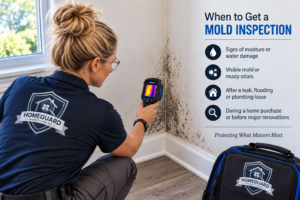
Seven signs that may warrant a closer look include:
1. Visible discoloration or suspected mold growth — Unusual spotting or growth on walls, ceilings, cabinetry, or other building materials should be investigated rather than assumed to be harmless.
2. A persistent musty odor — A musty or earthy odor may warrant further investigation even when no visible growth is apparent.
3. A recent or previous roof leak — Water intrusion from a roof can affect ceilings, walls, insulation, attic materials, and other areas that may not be readily visible.
4. Plumbing leaks or water damage — Leaks beneath sinks, behind fixtures, around water heaters, or within walls can create moisture conditions that support mold growth.
5. Flooding or significant water intrusion — Materials that remained wet after a flooding event may require further evaluation, particularly when the extent of the original moisture damage is unknown.
6. Repeated HVAC condensation or unexplained moisture — Condensation, elevated humidity, or recurring damp areas can indicate a moisture condition that deserves further investigation.
7. Concerns discovered during a home purchase — Staining, previous repairs, musty odors, elevated moisture, or evidence of past water intrusion discovered during a home inspection may be reasons for a separate mold assessment before closing.
These conditions do not automatically mean a home has a significant mold problem. They are signs that additional investigation may help determine what is happening and whether sampling or other evaluation is appropriate.
Mold Can Be Hidden Even When a Home Looks Clean
Mold growth isn’t always located where it can easily be seen. Moisture can affect areas behind walls, beneath flooring, around windows and doors, inside cabinetry, near plumbing fixtures, and around HVAC components. A professional assessment considers more than what is visible on the surface. Moisture measurements, visual observations, the home’s history, and other investigative tools can help identify areas that warrant closer evaluation. Understanding when to get a mold inspection is especially important when moisture may be hidden behind finished surfaces.
What Does a Professional Mold Assessment Include?
A professional mold assessment is more than a quick visual check or an air test. The assessment begins by evaluating the property for evidence of moisture intrusion, water damage, visible or suspected mold growth, and conditions that may be contributing to the problem.
Depending on the property and the concerns identified, the assessment may include moisture measurements, thermal imaging to help identify temperature patterns that may warrant further investigation, evaluation of accessible building materials, and sampling when appropriate.
At HomeGuard Inspections, the goal is to investigate the source and extent of the concern, not simply determine whether mold spores are present. Mold spores naturally exist in the environment, so laboratory results are most useful when considered together with what is happening inside the building.
Does Every Mold Inspection Need Air Testing?
Not necessarily. Sampling should have a purpose and should be based on the conditions found during the assessment. Depending on the situation, air samples, surface samples, or other testing methods may be appropriate to help evaluate a suspected mold concern.
When samples are collected, they are submitted to a laboratory for analysis. The laboratory findings are then considered alongside the visual inspection, moisture conditions, and other information gathered during the assessment.
Why Finding the Moisture Source Matters
Mold growth requires moisture, which means identifying why an area became wet is an important part of investigating a mold concern. A leaking roof, plumbing failure, poorly managed indoor humidity, HVAC condensation, exterior water intrusion, or another building-related issue may be contributing to the conditions.
Cleaning or removing affected materials without addressing the underlying moisture source can allow the problem to return.
Understanding where the moisture is coming from helps homeowners make better decisions about repairs and any remediation that may be necessary. If you’re unsure when to get a mold inspection, evidence of an unresolved moisture source is a good reason to have the condition evaluated.
Why Florida Mold Assessor Licensing Matters
Florida regulates mold assessment because evaluating a potential mold problem involves more than simply looking for visible growth. Florida defines mold assessment to include physical sampling and the detailed evaluation of information obtained from the building’s history and inspection to evaluate the origin, identity, location, and extent of mold growth when the regulated threshold applies.
HomeGuard Inspections Inc. provides mold assessment services under Florida Mold Assessor License MRSA5865. Working with a licensed professional helps ensure the assessment follows Florida’s requirements while considering the moisture and building conditions associated with the concern.
What Happens if Mold Is Found?
Finding mold does not automatically mean a home has a catastrophic problem. The appropriate next step depends on the location and extent of the growth, the affected materials, and the moisture condition that allowed it to develop.
When remediation is warranted, the information gathered during the assessment can help define the areas of concern and guide the next steps.
Addressing the moisture source remains an important part of correcting the problem and reducing the likelihood of recurrence.
Buying a Home With Signs of Mold or Moisture
Knowing when to get a mold inspection can be especially important during a real estate transaction. Discovering moisture damage or suspected mold does not necessarily mean you should walk away from the property. It does mean the condition deserves further investigation before making decisions about repairs.
A mold assessment can provide additional information when a home inspection reveals staining, elevated moisture, previous water damage, musty odors, or other conditions that warrant further evaluation. For buyers in Spring Hill and throughout Hernando County, having that information before closing can help clarify the condition of the property and any additional steps that may be needed.
Frequently Asked Questions About Mold Inspections
How do I know if I need a mold inspection?
Knowing when to get a mold inspection often comes down to whether there are signs of a current or previous moisture problem.
Consider a mold inspection when you notice visible discoloration, persistent musty odors, unexplained moisture, water-damaged materials, or have experienced a roof leak, plumbing leak, flooding, or another moisture event. A mold assessment may also be helpful during a real estate transaction when there is evidence of current or previous water intrusion.
Can mold be present even if I cannot see it?
Yes. Mold growth may occur in areas that are not readily visible, particularly where moisture has affected concealed building materials. An assessment can help identify moisture conditions and areas that warrant further investigation.
What is the difference between a mold inspection and mold testing?
A mold inspection or assessment evaluates the property and the conditions that may be contributing to suspected mold growth. Mold testing refers to collecting samples for laboratory analysis. Sampling can be an important part of an assessment when appropriate, but testing alone does not identify why a moisture problem developed or what building conditions may be contributing to it.
How long does a mold inspection take?
The amount of time required depends on the size of the property, the areas of concern, the property’s history, and whether sampling is needed. A property with several areas of suspected moisture intrusion may require a more extensive investigation than a home with one isolated concern.
Should I get a mold inspection before buying a house?
A separate mold assessment may be worth considering when a home inspection identifies visible growth, musty odors, elevated moisture, previous water damage, or other conditions that raise concerns about possible mold. Investigating those conditions before closing can provide additional information for the buyer.
Is HomeGuard licensed to perform mold assessments in Florida?
Yes. HomeGuard Inspections Inc. provides mold assessment services under Florida Mold Assessor License MRSA5865. Our building inspection and construction experience also allows us to approach mold concerns with an understanding of how moisture can enter and affect a home.
If you’re concerned about moisture, visible growth, musty odors, or previous water damage, knowing when to get a mold inspection can help you decide what to do next.
HomeGuard Inspections Inc. provides professional mold assessments for homeowners and homebuyers in Spring Hill, Brooksville, Weeki Wachee, Hernando County, and surrounding Tampa Bay and Nature Coast communities.
Schedule a Mold Assessment with HomeGuard Inspections today.